The Christian Churches Monitoring Group (CCMG) deployed 330 observers to every district and constituency to observe the Inspection of the Register of Voters conducted by the Electoral Commission of Zambia (ECZ) from 2-10 March 2026. The inspection of the register of voters was conducted pursuant to Section 19 and 28 of the Electoral Process Act and Paragraph 18 of the Electoral Process (Registration of Voters) Regulations, 2020.
The goal of CCMG’s observation was to contribute to the transparency and credibility of the exercise, and to enhance public confidence in the resultant register of voters slated for certification on 31 April 2026. CCMG’s monitors observed multiple aspects of the inspection process, including adherence to procedures, accessibility of the inspection locations for persons with disabilities, and voter participation.
The inspection exercise is critical to the electoral process as it allows registered voters to replace lost, damaged or defaced cards, verify and correct their registration details in the voters’ register, or transfer to a new polling station prior to certification of the register for an election. This is important in ensuring that citizens are not disenfranchised and can exercise their right to vote, and that the final register of voters is accurate, complete and current. CCMG’s observation therefore provides an independent assessment of the conduct of the exercise.
All of CCMG’s duly accredited monitors were permitted to observe the process. CCMG commends the ECZ for adhering to inspection procedures and for undertaking voter education/information on the exercise through both traditional and social media. Notably, 96% of CCMG’s monitors reported awareness-raising activities conducted by the ECZ, while 41% reported sensitization by political parties.
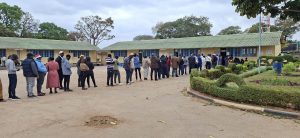
CCMG observed that the inspection of the provisional register of voters was largely conducted in a calm, peaceful, and orderly environment. However, CCMG documented four (4) critical incidents including centres not opening or opening late, kit malfunction, and disruption (see Critical Incidents section below).
Key Findings
- Limited availability of Voter Registration Kits
BVR kits were available in 62% of centres observed. Of these, 61% remained fully functional throughout the observation period. In centres where kits were unavailable or non-functional, voters requiring corrections were referred to alternative locations, potentially limiting access and efficiency.
- Inconsistencies in the Voter Register
At 8% of the centres observed, CCMG’s monitors noted instances where voters’ details were missing, incomplete or required a change, amendment or update. CCMG notes that the purpose of the exercise is for these issues to be corrected. CCMG reiterates that an independent audit of the voters’ register would be critical in establishing its overall integrity, including the identification of errors, omissions, and potential duplicate records.
- Accessibility Constraints for Persons with Disabilities
CCMG observed that 13% of centres observed were not accessible to persons with disabilities and required voters to use steps/stairs to access the centre. CCMG calls on the ECZ to assess the accessibility requirements of all polling stations and ensure reasonable accommodation, such as provision of ramps, for persons with disabilities prior to election day.
- Limited Stakeholder Engagement
The inspection of the voters’ register is a critical process for ensuring the accuracy of voter’s details ahead of an election. However, CCMG observed low levels of stakeholder participation. Representatives of political parties were present at only 14% of centres observed, while civil society and faith-based organizations had minimal presence, at just 1% of centres observed.
Critical Incidents
CCMG documented four (4) critical incidents involving centres not opening or opening late, kit malfunction, and disruption, detailed below:
- On 8 March 2026, CCMG’s monitors reported that two (2) registration centres namely, Farmers Training Centre in Mpongwe District (Copperbelt Province), and Lusaka Girls School in Lusaka District (Lusaka Province)did not open for the inspection period.
- On 8 March 2026, CCMG’s monitors at Munali Secondary and Kalingalinga Primary Schools in Lusaka District (Lusaka Province), and at Chisamba Town Council in Chisamba District (Central Province), reported that the registration centres opened after the official opening time resulting in long queues at Munali Secondary and Kalingalinga Primary Schools in particular.
- On 8 March, CCMG’s monitor at Mwanjuni Registration Centrein Chibombo District (Central Province) reported that the BVR kit malfunctioned resulting in the premature closure of the centre.
- On 8 March 2026, CCMG’s monitor at Sekelela Cooperative Hall in Chilanga District (Lusaka Province) reported an incident of disruption at the centre by UPND supporters who arrived at the registration centre singing campaign songs and dancing. Despite instructions and calls for order by ECZ officials and the police, the supporters did not leave the premises for close to an hour.
Conclusion
CCMG notes that the inspection of the provisional register of voters was conducted in accordance with established procedures, and in a generally calm and peaceful environment, reflecting positively on the efforts of the ECZ. However, the observation findings highlight operational and inclusivity challenges, similar to those observed during the mass voter registration exercise, requiring timely attention and redress ahead of the 13 August 2026 polls. These include gaps in the availability and functionality of BVR kits, instances of voters’ details missing or needing updates or corrections although these issues could be the result of voters relocating or needing corrections for other reasons. Accessibility barriers for persons with disabilities, and low levels of stakeholder participation were equally noted. Additionally, the critical incidents documented, though limited in number, highlight sustained vulnerabilities in the exercise.
In view of the foregoing, CCMG underscores the importance of implementing targeted corrective measures to strengthen the quality and inclusiveness of the register of voters. In particular, CCMG reiterates its call for an independent audit of the register of voters to comprehensively assess its accuracy, completeness and currentness, identify any anomalies, and inform necessary improvements ahead of the certification process.
Ultimately, the credibility of the voters’ register is a prerequisite for public trust in the electoral process. CCMG therefore urges the ECZ and all stakeholders to act decisively on these findings to safeguard the integrity of the register and ensure that all eligible citizens are able to fully exercise their right to vote.
Lastly, CCMG commends citizens who inspected their registration details during the period prescribed for inspection.