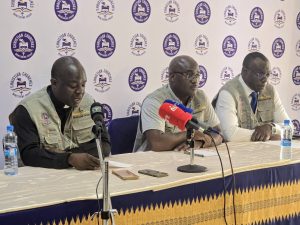
The Christian Churches Monitoring Group (CCMG) conducted in-person observation of all 116 district-level sittings and the 10 provincial-level sittings, alongside a comparative analysis of voting power across constituencies before and after the 2026 delimitation. CCMG’s observation focused on assessing how accessible the sittings were to citizens wishing to make submissions, and how effectively the Electoral Commission of Zambia (ECZ) facilitated deliberations and shared relevant information. The voting power analysis was undertaken to determine whether the resulting constituency boundaries uphold the principle of equality of the vote, or whether disparities in voting power result in some constituencies being under or overrepresented.
CCMG has released its preliminary findings on the 2026 boundary delimitation exercise, highlighting critical gaps that risk undermining the principles of equal representation, transparency, and public confidence in the electoral process. Boundary delimitation is a cornerstone of democratic governance, as it defines how citizens are represented in Parliament. At the heart of this process lies the constitutional principle of “one person, one vote,” which requires that all constituencies have broadly equal populations to ensure fairness in representation. However, CCMG’s analysis indicates that this principle has not been fully upheld in the 2026 exercise.
CCMG’s preliminary analysis reveals significant disparities in voting power across provinces. In particular, constituencies in Lusaka appear to be severely underrepresented compared to those in provinces such as Western, Muchinga, and North-Western. These imbalances mean that some constituencies, represented by Members of Parliament in the National Assembly, have way more citizens than others, thus contradicting the fundamental democratic principle of equal suffrage. As the ECZ has not yet released the full details on the new constituencies, including their populations and geographical boundaries, additional analysis is not yet possible.
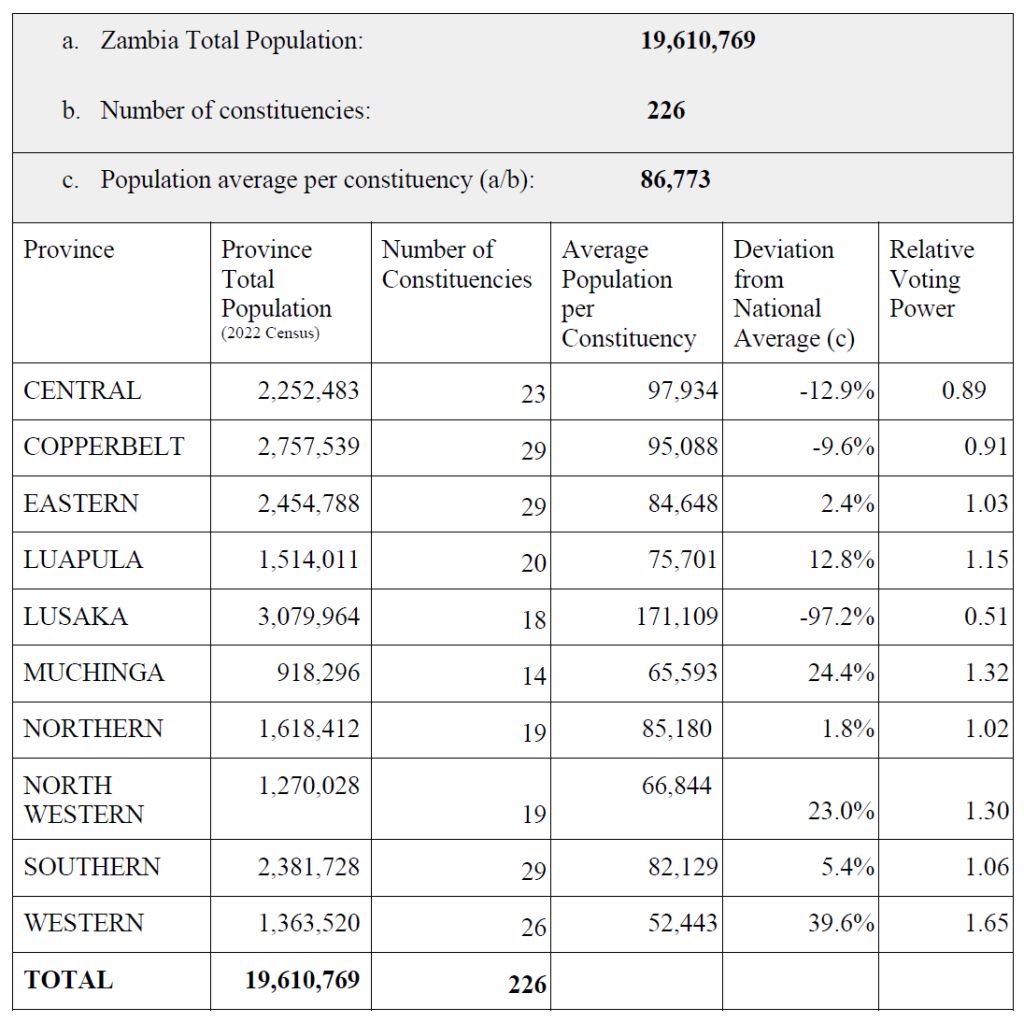
A central concern is the lack of clarity in the legal and procedural framework governing delimitation. Zambia currently does not have a clearly defined population quota or acceptable deviation threshold to guide constituency boundaries. This omission creates ambiguity in how decisions are made and limits the ability of stakeholders to independently assess whether the principle of equal representation has been met. CCMG and others have advocated for reform of the legal framework, including the current Electoral Process Act (Amendment) Bill 44 of 2026, to include this legal guidance. Additionally, the failure to publish detailed constituency data, including population figures, ward composition, and boundary maps to date, has limited comprehensive analysis and public scrutiny of the delimitation outcomes.
Further, CCMG notes with concern that the timing of the delimitation process, conducted just months before the 2026 general elections, runs contrary to international best practice. Late-stage boundary changes introduce uncertainty into electoral planning and place undue strain on political parties, candidates, and voters. This compressed timeline risks voter confusion and may undermine the credibility of the electoral process.
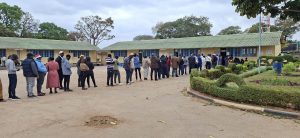
While CCMG acknowledges that the district-level delimitation sittings were generally well- administered, orderly, and inclusive in terms of stakeholder participation, important shortcomings were observed. These include inconsistent access to key documents including the 2019 Boundary Delimitation Report, limited time for meaningful deliberation, and inadequate public communication in some districts. The reduction of consultation periods to one-day sittings further constrained stakeholder engagement compared to previous exercises.
At the provincial level, CCMG observed that sittings largely served as procedural handovers rather than substantive platforms for validation and consensus-building. The 2026 boundary delimitation exercise presented a critical opportunity to strengthen Zambia’s democratic framework and ensure fair representation for all citizens. While CCMG notes some administrative strengths, the process ultimately fell short in key areas, particularly in upholding equality of the vote and ensuring full transparency.
CCMG calls on the ECZ to immediately release full and detailed information on the delimitation exercise, the deliberations, how stakeholder feedback was incorporated into decision-making, and how the final constituency boundaries were decided.
CCMG urges all stakeholders to prioritize reforms that will safeguard the credibility of Zambia’s electoral processes and reinforce public confidence in democratic institutions. CCMG commends citizens and stakeholders who participated in the delimitation process by making submissions in this important exercise.